

Operation Mincemeat trailer breakdown: director John Madden on making a different kind of World War 2 movie - stilesfamere57
Operation Mincemeat trailer breakdown: director John Craze on making a different kind of World War 2 flic
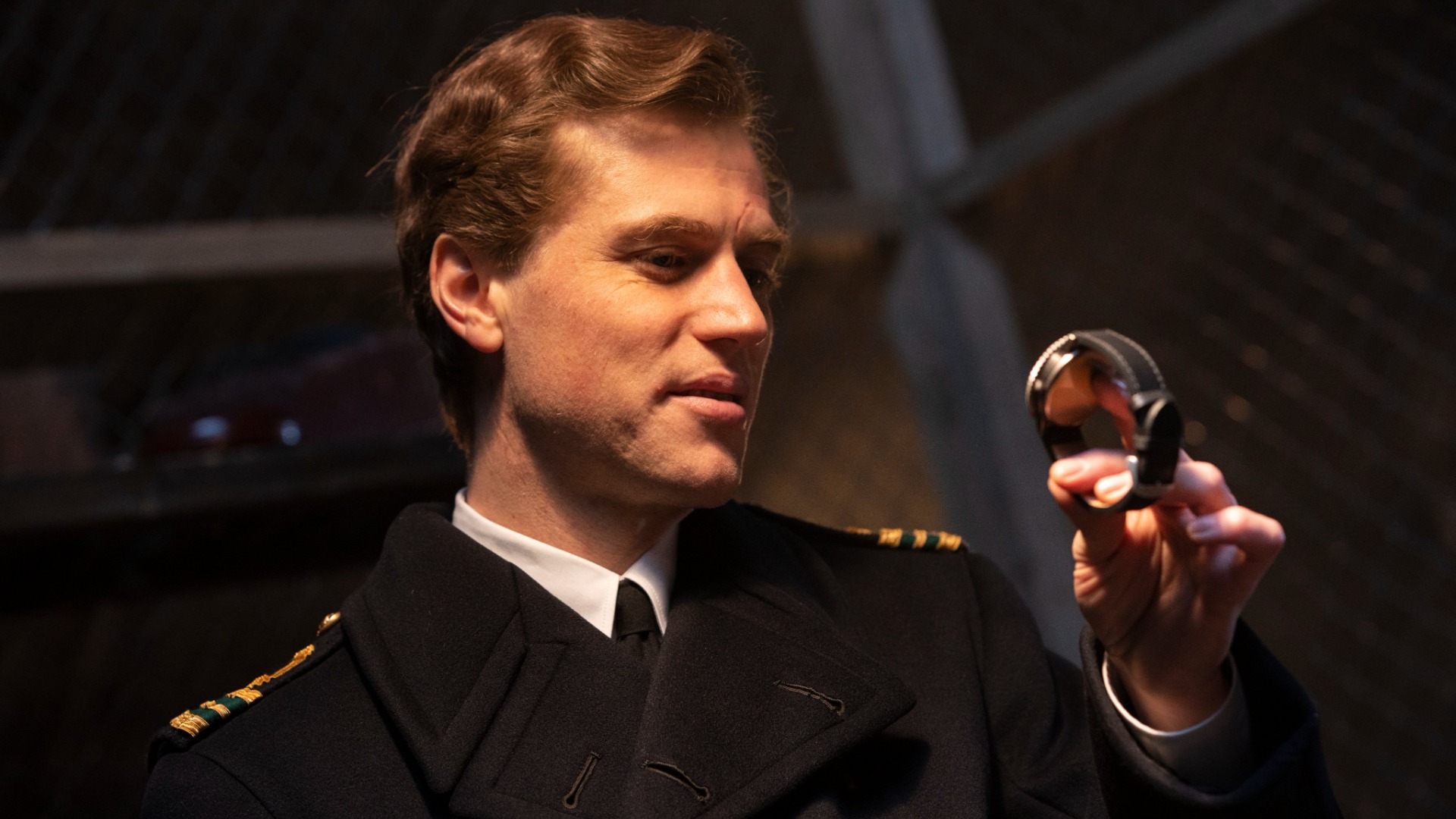
"In stories of war, there is that which is seen and that which is hidden," Johnny Flynn's Ian Fleming says in the trailer for Operation Mincemeat, and this is sure as shooting a motion-picture show that deals with the latter.
Plant in 1943 when things were make or dampen for the Allies fighting Hitler in Europe, Operation Mincemeat is based on real events. The story follows intelligence information officers Ewen Montagu (Colin John Rupert Firth) and Charles Cholmondeley (Matthew Macfadyen) who derive up with an improbable disinformation strategy centered on an last secret agent – a breathless man.
Equipping a random corpse with sensitive documents that identify him as an army major and making sure he washes up on the shores of ideology Spain, the planted papers make sure everything about the British project to invade Greece goes straight into the hands of the Nazis. The eddy? None of it is apodictic – the British are actually invading Sicily.
Director John Craze, whose former movies include the Academy Award-winning Shakespeare gaga, talks us finished utilizing "the weapon of surprise", re-teaming with Colin Firth, and why the film will counteract your expectations of a World War 2 motion-picture show.
GamesRadar+: Worldwide War 2 is frequently trodden ground in movies. How did you approach Operation Mincemeat to spend a penny surely it added something several to the genre?
John Madden: Well, I think back the nature of the story itself puts it in a unique family in terms of the annals of wartime stories and wartime films, actually. In some senses, you could say it's an improbable story to make as a film because information technology's not full of action. It's the hidden war it's dealing with, rather than the overt war where people are existence snapshot to pieces and battles have been won or lost. It's actually about the creation of fiction, which is one of the things that makes it really, really fascinating, and you can realise that probably in the trailer, I recall. They're sporty trying to persuade Hitler, to persuade the enemy, that they're non going to do something that is blindingly obvious that they will fare if they were going to approach having a chance of winning that specific strategy in the war, which is basically how to acquire a foothold in Europe, and try and turn the warfare around again.
So one of the things that's singular about information technology, and I think back you can sense information technology from the trailer, is that it's very incongruous equally a man. It's some funny, because of the extremely odd idea that they come up with, you know, to foot the strategy on and because of any of the oddness that occurs as a resultant. It's such a strange idea, it really ought non to work, and as the news report unfolds, in that location are umpteen, many, many reasons that it might not work. So I conceive its uniqueness is what makes it unusual – that's implicit in its title, it's a very unusual title for a motion picture.
I think there may be a sense of people thinking, 'Oh, I guess I know what a World War 2 movie is.' Especially if it involves espionage, they have a certain idea. Well, this cinema does not adapt to that idea, information technology really doesn't, and its greatest arm, I think, is the weapon that they had when they dreamt up the melodic theme, the weapon of surprise, and the film turn in several directions that you weren't expecting to go in. That's a very pleasurable experience, I consider, in the film.
Did you find IT challenging to realise a film based on real events? How much were you tempted to crease the facts for the welfare of the plot?
JM: It's hard to talk more or less this project without referring to it as a kind of metafictional suggestion, because the film is nigh a tarradiddle, a report that reputed to be true, but was actually fictitious. I'm talking about the story of a man who clean up ashore because his aeroplane was downed, and he happens to be carrying crucial papers that actually would allow the enemy to see what the Allied plans were. That's the true story, that actually turns out to embody a completely pretended floor. So it's virtually as if the material itself is dealing speculatively and whether or not the mind that you're trying to carry is actually employed.
So some of the challenge that actually becomes what you have to deal with, in terms of creating this fiction for an interview: are they going to believe information technology? That's the question that sits at the heart of the storey, and is one that you'rhenium forever asking an audience to do. So from my point of prospect, the challenge of it, and the interest in it, was accommodating a number of different kinds of tones and moods in information technology. There's a sense in which information technology sort of embraces the preposterous, that's in terms of what the story actually involves, trying to put a man who was already dead into the water and pretend that helium died a couple of days ago, and so on then off. I mean, there are some odd ideas in there. And they bring about to divers and conflicting emotions.
At the same time, the film is practically, much more emotional than you would ever guess. It deals selfsame much with the way in which the people who dream up the idea, who throw a sense of humor, and a sense of mischief, and a sense of merriment, and a very, very serious sense of how to make up a bulletproof fable... and finish in a place where they have no idea whether what they've done can actually work, and what the risks that are entailed in the idea not working, which would beryllium an dead large massacre.
I mean, there's enough that's bizarre about the story, so we really didn't have to falsify anything. It is an extraordinary story and it is one that gives develop to all kinds of hypothesis. I have in mind, many, many people will come forward with stories about this formerly the film comes out, because I know that's honorable, IT happened to Ben [Macintyre] when He wrote the book as well, people separate of own a little bit of it, or you suddenly find one person who played a midget part in it. So I had Ben's book to rely on, which, intrinsically has a degree of conjecture in it, because as I said, the material invites that, but we acquire gravely an obligation to the real characters, because their families are still hither and still with us, and we showed the film to them, and it wholly goes into the process.
Did you watch The Gentleman World Health Organization Never Was, the 1956 picture about the same events?
JM: Yes, I watched information technology rather late in the 24-hour interval, you'll not comprise surprised to hear. Just because if you're nerve-racking to blusher a characterisation, you assume't deficiency to paint the video that's already been painted. A very interesting thing about that adaptation is that it was an adaptation of a Word, which was an chronicle of Performance Mincemeat written by Ewen Montagu, who is the character that Colin J. R. Firth plays in our story. And that was handwritten under the very tight control of the intelligence services, World Health Organization were very sensitive. The account was written only ternary years afterwards the end of the war, and the film of that was made about five or six years later, where the shadow of the war was soundless tarriance, and so it actually has a completely divergent take happening the story. And, most critically, the identity of the body that they use was something that the intelligence services were really anxious should non ever be known. And thus they had to create their possess fiction around that story in the master cardinal. In other respects, obviously, there are areas where the story overlaps, but it's a all different kind of film.
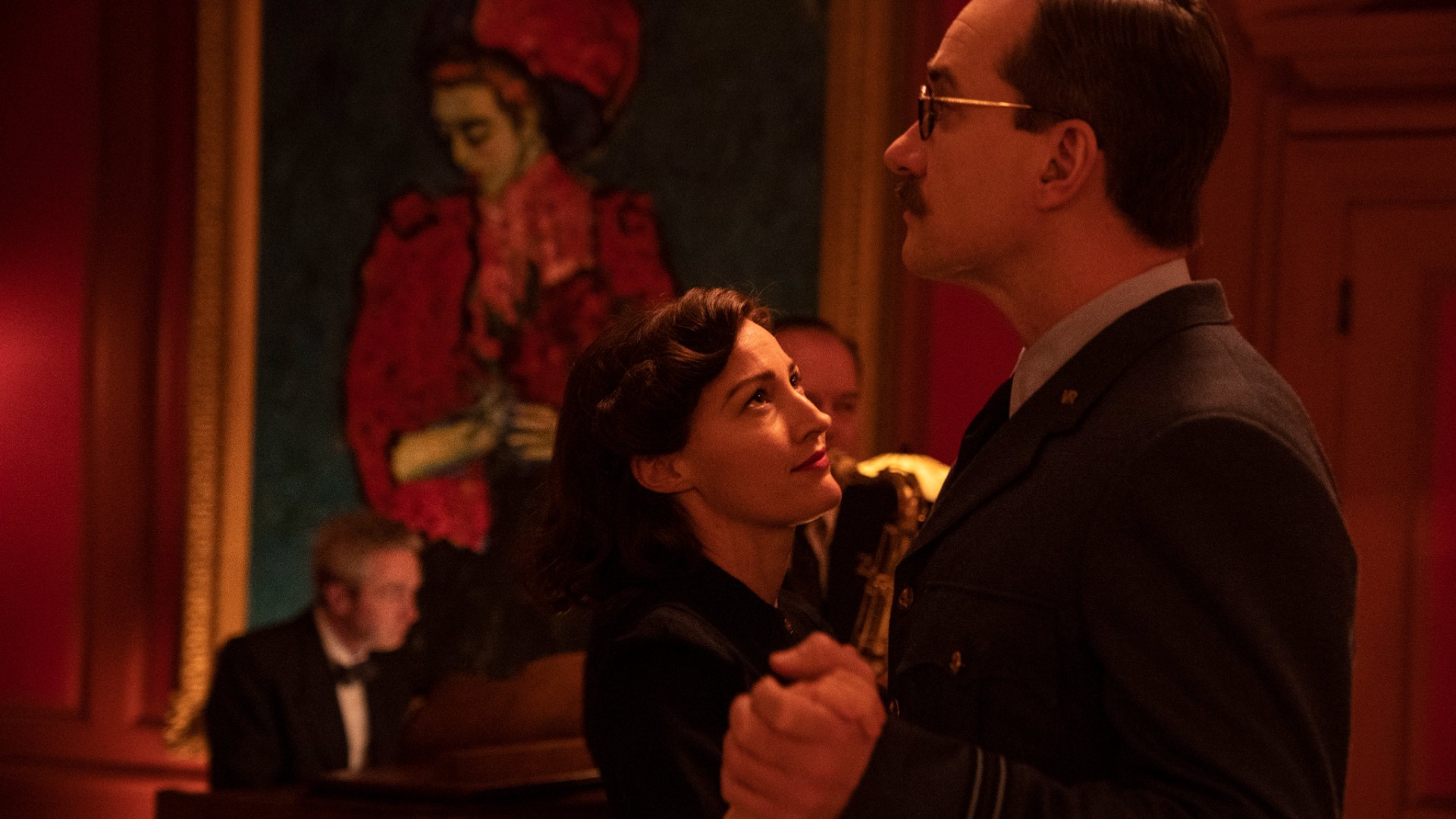
I wanted to ask as well about the part of the women in the photographic film – supported the trailer, it looks like Kelly Macdonald's character has quite an central role to play. Was that something you thought had possibly been downplayed by other accounts of the events?
JM: Really interestingly, the character that she plays, World Health Organization herself becomes a kind of worthy for unrivaled of the characters within the fiction they'rhenium creating, was also very central to the strange flic. But, really, there are cardinal women who are very, very unfavorable in the story. Kelly is uncomparable of them, she plays a character called Jean Leslie, a real person, obviously, and she is selfsame, precise significant in the creation of the undivided thing. You'll see Kelly work a part that she hasn't always played before.
The other is Penelope Wilton, who plays the trusted confidant of Ewen Montagu and his trusted right hand A it were, and she has an inordinately epoch-making character at the center of information technology as well, which is one of the things that's selfsame, real discriminating about the story, IT is about the partnership 'tween those two men [Montagu and Cholmondeley], but it's really about that quartet of citizenry and the pressures that touch on touch on all of them as they get subsumed into the fiction they're creating. So it's very bewitching from that stand, and these are women who are not characterised by their romantic attachments so very much like by the work that they'rhenium doing, which is kinda unusual in a piece of that geological era.
This was your first time working with Colin Firth since Shakespeare taken with in 1998 – what was it like to work together again after all those years?
JM: Well, we've been trying to do it in the intervening 20 years because he's a precise good friend of mine, and he lives just around the corner and it's certainly not the first time I've tried to lic with him. But we've been confounded aside conflicting schedules or one affair just overlapping in the wrong rank. And I have to say that for certain separate projects that I've nearly finished or been involved with, he was sure as shooting already installed in my psyche as the perfect casting for x, and therein particular cause, information technology just seemed similar a utter union to me.
I ended awake with the two of them, with Colin Firth and Matthew Macfadyen, as the kind of ideal casting for this. They correspond the characterizations almost perfectly. As it happens, they've both played Mr. Darcy, which has been pointed out before. Just really, they'Re just now an incredibly good match. You examine the way it unfolds in the story, and so thither was something terrific about that. Colin, I think, has launch his feet as an absolute unparalleled kind of leading actor, because obviously his Oscar nominations, and his Academy Award succeed [for 2010's The King's Speech], happened halfway through that period betwixt being in Shakespeare in Love and this motion picture, and so it's been very, very overnice, finally, to gain that happen once more.
Operation Mincemeat will arrive in Great Britain theaters happening January 7, 2022. In the United States of America, it's laid to be free on Netflix, merely it doesn't have a publish date across the pond up to now. In the meantime, look into our list of the former upcoming movies to get excited about in 2021 and beyond.

Source: https://www.gamesradar.com/operation-mincemeat-trailer-breakdown-director-john-madden-on-making-a-different-kind-of-world-war-2-movie/
Posted by: stilesfamere57.blogspot.com
0 Response to "Operation Mincemeat trailer breakdown: director John Madden on making a different kind of World War 2 movie - stilesfamere57"
Post a Comment